


Navigating Solutions with Kristen Border Patton | A Port in the Storm: Steady Shelter Through Change
This month’s blog is written by Kristen Border Patton, Director of Operations
Earlier this month, the Johnson Street Shelter closed. This is a huge loss for the community, and a major change for the Poverello Center, which oversaw the shelter for the five years it ran. As our organization undergoes a huge change, I am reminded of all the storms we have weathered here during my 16-year tenure.
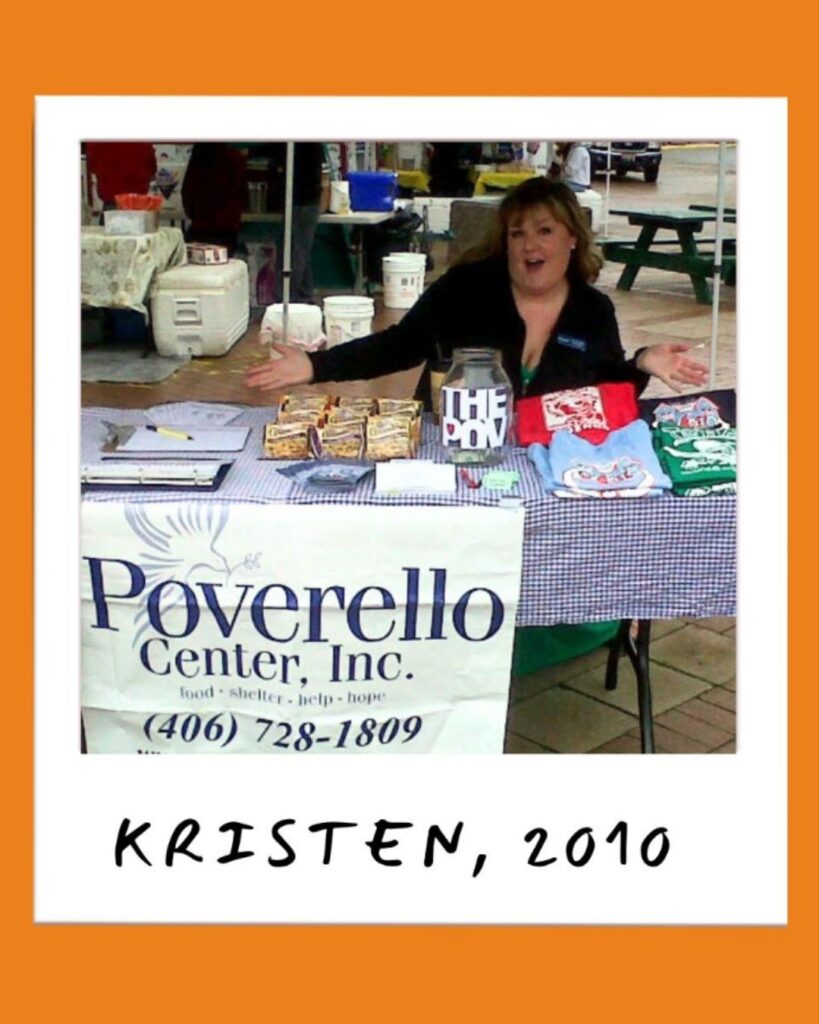
When I started at the Poverello Center as an Administrative Assistant in 2009, the recession had left many people struggling to stay afloat. The Poverello had very little money for staffing, repairs, or fundraising.
We were located at 535 Ryman Street, which served 70 to 90 people nightly, and only ever had one direct care staff member working at any time. I remember that our building, which had been in use as a shelter since the early 1980s, felt like it could fall apart at any time, and there was no maintenance staff member – our shelter manager at the time did all of that work. It was an era of putting duct tape on broken items and hoping they stayed together. Despite the hard work, we made it happen, and provided food and shelter every night to our neighbors in need.
When we moved into the new building at 1110 W Broadway, it was a stark awakening to all of the amenities we hadn’t had before. We were so excited to have upgrades like an elevator, expanded space to fit more people, and commercial-grade laundry facilities, but we had not considered how many more employees we would need to run it all. Slowly but surely, we filled the employment gaps: a full-time maintenance staff member, a food programs associate, and more and more direct care staff.
Opening the Johnson Street Shelter was an additional expansion of services, and another big change. During the COVID-19 pandemic, the City of Missoula recognized the need for more shelter space, and utilized federal funding to create more shelter space in an additional building. With this support, our staff went in and built a supportive shelter from the ground up. As each year passed, the shelter became more robust; it upgraded from porta-potties to modular bathrooms, and from mats on the floor to beds, thanks to the support of the community. The Johnson Street Shelter, by the end of its life, was a well-oiled machine, dedicated to keeping people out of the elements.
We were grateful for the funding and support from the City, which made this possible, and we were devastated when the funding ran out. We knew this would be a big hit to the clients who relied on the Johnson Street shelter. From a human resources perspective, it was incredibly difficult to lose staff members whose wages depended on that funding.
Through the years, working at the Poverello Center has often felt like navigating rough seas – moving buildings, shifting staff, and reimagining services can be a bumpy process. However, the organizational culture has always maintained an attitude of “if it has to get done, let’s do it.” In a work environment where everyone is here because they want to help, the big challenges become easier with teamwork. And while these challenges are difficult, there are some upsides: our staff will all be in one building again, which will bring us closer as a team. Additionally, guests who have been travelling from one location to another will have an easier time accessing services when they are all in one place.
I have seen so many changes over the years. Even as we move between buildings, even as we combat floods or heatwaves, and even as the world around us spins into an unknowable future, I trust that the Poverello will land on its feet.
We are already making big moves towards progress and further care for our neighbors, as we begin deconstruction on the old Clark Fork Inn at the corner of Scott Street and Broadway. This project, which has been in planning stages since 2021, will be a new space for Housing Montana Heroes, our veterans transitional housing program. It will include 20 single-occupancy transitional housing units for veterans, each of which will have private bathrooms and kitchenettes. Residents will also have access to a community kitchen, community room, and private spaces for case management. This will free up space in the Poverello Center building, so we can expand shelter or other programs, and better serve more community members.
I view our role in the community as a port in the storm. During times of upheaval, we will always be committed to taking in the neighbors who need a roof over their heads. Not only that, but we also are committed to furthering progress to ensure that our community can withstand storms for a long time to come.