


Navigating Solutions with Arynn Payne | Healing and Hope in Medical Respite
This month’s blog is written by Arynn Payne, Medical Respite Care Coordinator
Imagine being discharged from the hospital with stitches still fresh, pain medication in hand, and nowhere to go: no bed, no quiet place to heal or call your doctor to ask a question about your recovery. Your immediate concern would be finding a comfortable place to lay your head.
For many of our unhoused neighbors, this isn’t hypothetical. It’s reality. And that’s why the Poverello Center’s Medical Respite Program exists.
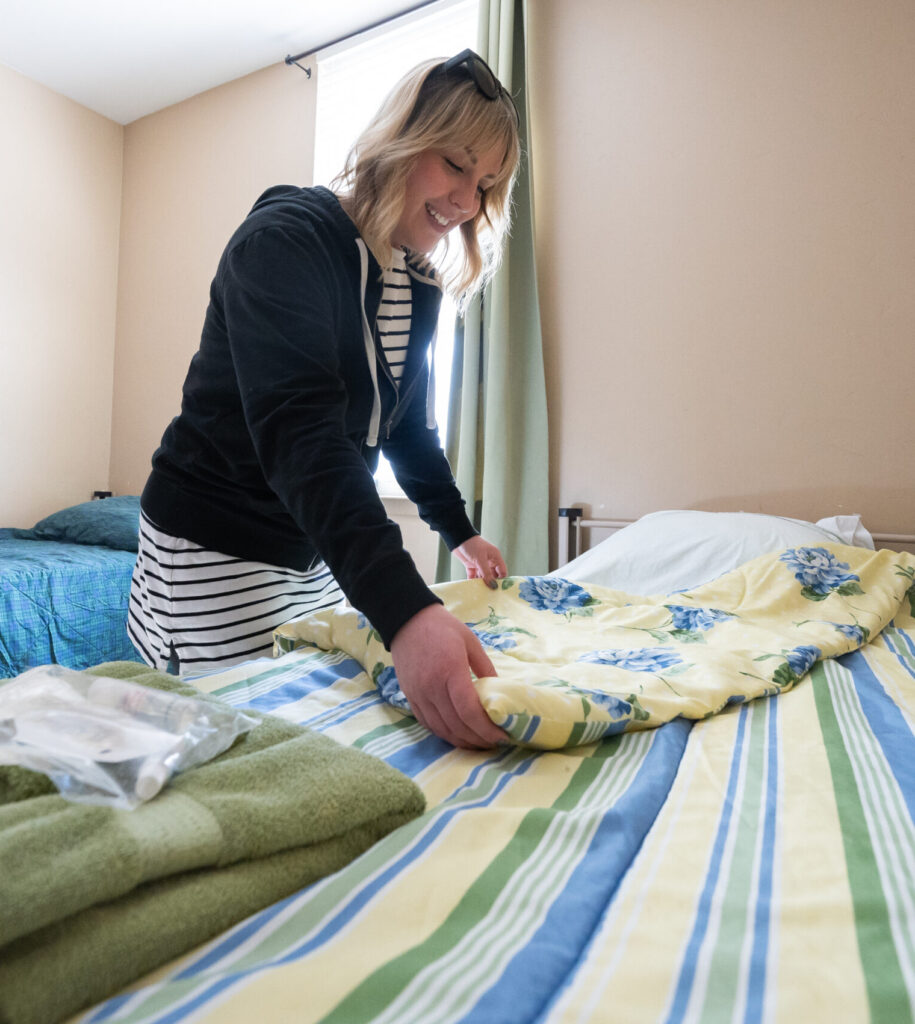
Medical Respite provides a safe place for people to heal after a hospital stay when they aren’t well enough to stay in the general shelter. Guests stay in a private or semi-private room, receive support with aftercare, and, most importantly, get the dignity of rest and recovery in safety.
What Healing Looks Like Here:
Every person who enters our program brings their own story and their own needs. My role is to coordinate care and remove barriers that can make recovery nearly impossible while homeless. This often means:
- Picking up prescriptions and understanding their treatment plan
- Scheduling and transporting people to follow-up medical appointments
- Helping people contact their providers when they don’t have a phone
- Assisting with applications for Medicaid, SNAP, or ID recovery
- Connecting them to behavioral health, case management, or long term housing supports
Hip surgeries are surprisingly common in our program, something we’re seeing more as more older adults experience homelessness. In just the past few weeks, we’ve supported three individuals after total hip replacements. When someone arrives exhausted and in pain after major surgery, sometimes the first and most important thing they do is sleep, because safe, uninterrupted rest hasn’t been possible in a very long time.
What Success Really Means:
Medical Respite is a short term program. Most guests stay about two to three weeks. Success here doesn’t always look like housing (though we celebrate when that happens, too) Often, success looks like:
- Someone staying alive and safely completing recovery
- Preventing another ER visit or hospital readmission
- Connecting someone to a primary care provider for ongoing care
- Helping someone move into long-term care, reunite with family, or transition into Veterans housing
- Supporting someone so they have the strength to take the next step—like getting ID documents, applying for benefits, or beginning housing navigation
Sometimes the biggest success is simple. People’s health outcomes are improving because of this program.
In 2024, our Medical Respite program saved the Missoula community an estimated $493,200 in hospital costs by providing a far more cost-effective and compassionate alternative to hospital stays and emergency room visits.
That doesn’t mean the program pays for itself. In Montana, unlike many other states, Medical Respite cannot bill Medicaid. We also do not have hospital contracts to help fund this care. Our entire program is community-funded, powered by generosity, not reimbursement systems.
And yet, despite limited funding and staffing, the program has achieved national recognition. The Poverello Center was one of the very first programs in the country to receive Medical Respite Program Certification from the National Institute for Medical Respite Care.
Homelessness is, in itself, a health crisis. Sleeping outside means poor rest, limited nutrition, exposure to weather, and higher risks of injury, illness, and trauma. When someone becomes sick or injured, recovery without safety and shelter is nearly impossible.
As demand for all of the Poverello’s services is increasing, so is the need for a safe place to recover from injury or illness. The Medical Respite program is one of the most powerful ways we live out the Poverello Center’s mission, while treating every person with dignity and compassion. When we offer a warm bed, medical care, and privacy to someone who is sick or injured, we do more than help them recover, we remind them that they matter. And when you support this work, you help make that healing possible. This program is a step towards building a community in which every person has a safe place to call home.